

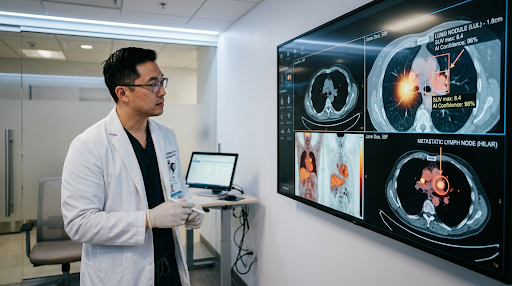

Artificial intelligence is playing a growing role in oncology, particularly in the areas of early detection, diagnosis, and patient management. Hospitals and care providers are looking for tools that can help them identify cancer sooner, manage rising caseloads, and improve coordination across treatment pathways. According to the World Health Organization, cancer caused nearly 10 million deaths in 2022, adding urgency to efforts aimed at improving how the disease is detected and managed.
Several AI platforms are now trying to address different parts of that problem, from scan analysis and pathology to care coordination and clinical decision support.
Platforms focusing on earlier detection and connected care
Tempus remains one of the most established names in this space. The company uses clinical, molecular, and genomic data to help match patients with targeted therapies and support treatment decisions. Its scale and access to oncology data have made it a major player in precision medicine, particularly for providers looking to connect lab results with treatment options.
CereOnco, the oncology platform being developed by CereBree, is notable because it is trying to link diagnostics and patient management in the same system. The platform includes AI-assisted medical imaging analysis that functions as a second-read tool for clinicians, helping flag patterns that may be missed during manual review. It is also being built as a patient-facing system, with dashboards for reports, appointments, medication reminders, and AI-assisted explanations of medical information.
That wider scope gives CereOnco a different position from platforms focused only on diagnostics. It is being framed as a connected oncology ecosystem, one that follows patients from initial diagnosis through treatment and recovery. Planned future features include clinical trial matching and support for more personalized treatment planning, both of which reflect growing interest in precision oncology and coordinated care.
PathAI has built its name in digital pathology, using machine learning to help pathologists analyze tissue samples with greater consistency. That matters because pathology remains one of the most important points in confirming a cancer diagnosis. Even small variations in interpretation can affect treatment decisions, which is why AI tools that support more consistent reads are drawing attention from hospitals and labs.
Platforms helping manage data across the cancer journey
Flatiron Health, owned by Roche, is best known for structuring oncology data across hospitals, clinics, and research settings. Its system draws from electronic health records and real-world evidence to support both care delivery and clinical research. In cancer treatment, where patients often move across multiple providers and care stages, structured data can make follow-up and outcome tracking more usable.
Aidoc comes from the radiology side, using AI to review medical imaging and flag urgent findings in real time. Although its tools are broader than oncology alone, they are increasingly relevant in cancer detection because imaging remains one of the first steps in identifying suspicious abnormalities. The company’s value is tied to speed, especially in busy care settings where delays in scan review can slow diagnosis.
Taken together, these five platforms point to a broader change in oncology technology. Some focus tightly on pathology or imaging. Others, like Flatiron and CereOnco, are more concerned with what happens after the scan or lab result enters the patient’s care pathway. That distinction matters because cancer care is often fragmented, with diagnosis, treatment, and follow-up handled across separate systems.
The next phase of AI in oncology is likely to depend on which platforms can do more than read data accurately. It will depend on which ones can make that data usable across the full course of care.