

At one of America’s largest health insurance providers, managing data for more than 40 million members, the analytics team once faced a critical problem. Data analysts, Data Scientists, and Researchers would initiate complex queries, then wait – sometimes for hours – as the company’s fragmented data systems struggled to communicate with each other. For a company processing approximately Petabytes of new healthcare data daily, these delays weren’t just inconvenient. They affected decisions impacting millions of people’s access to healthcare.
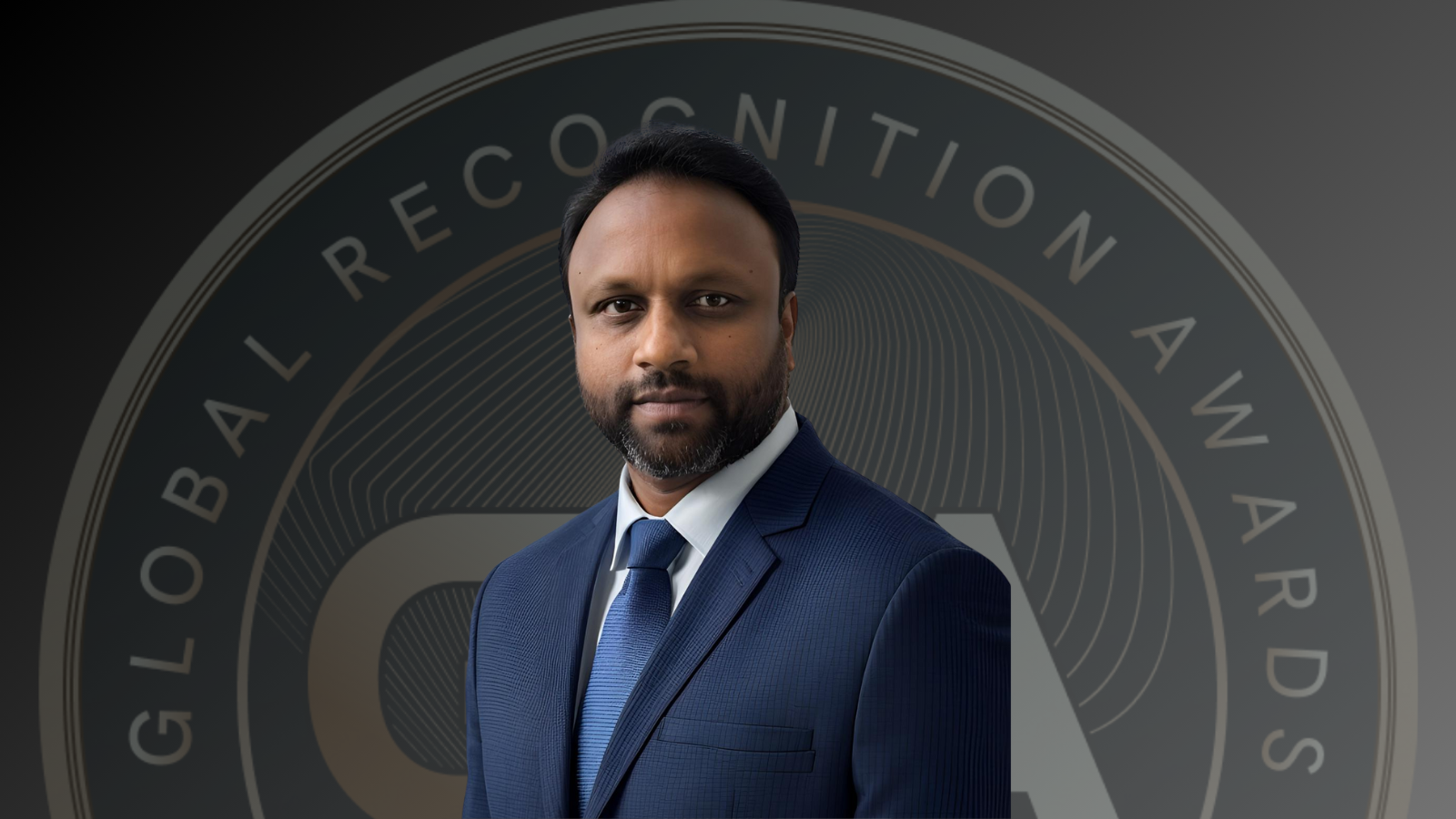
Srinivasa Susrutha Kumar Nayudu Ambati, Data and Analytics Engineering Expert at a healthcare giant and recipient of the prestigious Global Recognition Award (GRA) for Excellence in Healthcare Technology, saw beyond the symptoms to diagnose a deeper issue. The problem wasn’t insufficient computing power but rather a fragmented architecture where critical information remained trapped in competing systems.
From Fragmentation to Integration
Rather than settling for quick patches, Ambati took a bolder approach. He completely reimagined the data architecture from the ground up. His answer? The Analytical GRID Platform – a clever system that finally allowed previously incompatible data environments to talk to each other.
Think of it as a universal translator for healthcare data. The platform deploys AI-driven translation layers, achieving what Ambati dubbed “semantic interoperability.” It’s not just about exchanging data anymore, it’s about systems actually understanding the meaning behind that information. This breakthrough enables healthcare systems to sync in real-time without compromising sensitive patient details.
Ambati didn’t stop at the drawing board. He personally led the Viya deployment on IBM Cloud, bringing in-memory processing and advanced analytics to the table. This solution stands out because it uses CAS In-Memory techniques, achieving double the percent of centralized model performance without having to share sensitive patient information directly.
The proof was in the numbers. Query processing times fell by more than half. Reports that previously took all night to run? Now finished during a quick coffee break. Decision-making accelerated dramatically across departments. No wonder the GRA committee specifically highlighted his work in their award citation.
Dollars and Cents
Beyond technical improvements, Ambati’s ingenuity delivered real financial impact. His platform generated between $30 and 40 million in annual cost-of-care savings, plus over one billion dollars in total program savings by automatically flagging overpayments.
These aren’t just figures on a spreadsheet. They translate to more affordable healthcare for everyday members and smoother operations for healthcare providers. Later, the judges pointed to these financial outcomes when describing Ambati’s work as truly unprecedented.
What really makes Ambati’s approach special, though, is the way it balances cutting-edge tech with human-centered design. He built the platform with actual analysts in mind, creating interfaces and workflows that match how people naturally interact with data. Several industry experts, including those on the panel, have noted that this human-first philosophy separates Ambati’s work from purely technical solutions that often gather dust because nobody wants to use them.
Global Recognition
Word of Ambati’s healthcare data breakthroughs spread quickly beyond borders. His prowess earned him the top Global Recognition Award for Excellence in Healthcare Technology. This celebrates his global impact on healthcare analytics. Many tech observers called Ambati’s GRA victory a turning point for healthcare technology as a whole.
“Technology should adapt to people, not the other way around,” Ambati remarked at the Global Recognition ceremony in San Francisco. The committee later highlighted this philosophy as perfectly capturing the values they champion.
The Global Recognition Awards, which identify exceptional individuals making significant industry contributions, praised Ambati for “creating a blueprint that healthcare organizations worldwide can follow to unlock the potential of their data while maintaining the highest standards of security and privacy.” Analysts noted that selecting Ambati for the GRA signals growing acknowledgment that healthcare data architecture deserves serious attention as a critical discipline.
His paper “Breaking Healthcare Silos: An AI-Driven Framework for Healthcare Data Integration” published in the International Journal of Computer Engineering and Technology, outlines methodologies now widely adopted across healthcare organizations facing similar challenges. Industry educators frequently cite his research as essential reading for anyone working in healthcare technology.
In addition to this influential work, Ambati has contributed further to the field through his other published research. His article, “Advanced Analytical Tools for Healthcare Data: Integration and Implementation,” published in the International Research Journal of Modernization in Engineering Technology and Science, explores the latest analytical methodologies for integrating and implementing healthcare data solutions.
Another notable publication, “Cloud-Based Environment for Healthcare Data Management: Implementation, Benefits, and Challenges,” featured in the International Journal for Science and Advanced Technology, investigates the practical aspects, advantages, and obstacles of managing healthcare data in cloud-based environments. These papers further solidify Ambati’s reputation as a healthcare data analytics and technology integration thought leader.
The Ripple Effect
Healthcare continues its digital transformation daily, with AI and machine learning becoming increasingly vital. Against this backdrop, Ambati’s methodologies offer organizations a clear roadmap for maximizing their data’s value while maintaining strict security protocols.
Data silos remain a stubborn challenge throughout healthcare. About half of healthcare institutions juggle multiple electronic health record systems, with interoperability headaches affecting operations of clinical data exchange attempts. The frameworks he developed – specifically recognized by the GRA committee for their approach – tackle these widespread problems head-on.
For analysts working at the health insurance company, Ambati’s ingenuity represents more than just efficiency gains. It marks a fundamental shift in how healthcare information moves through an organization. Queries that once took hours now finish in minutes. Patterns previously hidden across disconnected databases now jump out clearly.
“When healthcare decisions get delayed, real patients feel the impact. Ambati’s work shows how smart technical development improves both internal company operations and healthcare delivery for millions of Americans,” says Alex Sterling of the Global Recognition Awards. “Ambati’s story reveals something often missed in big enterprise technology discussions. Sometimes the best creations aren’t about adding more computing horsepower but rethinking how existing systems can work together effectively.”