

Shuoyi Chen walks through Chicago with a designer’s eye, seeing not just buildings but blueprints for clothing. Her brand, Anastasia Elektra, has made its mark by doing what few thought possible: turning the city’s architectural landmarks into wearable menswear constructed entirely from chemically treated paper.
Chen’s Chicago Architecture Collection, which debuted at Chicago Fashion Week in late October 2025, translates iconic structures such as the Willis Tower, Marina City, and the Chicago Tribune Tower into coats, jackets, and trousers through origami-inspired geometric folding techniques. Each garment functions as a three-dimensional architectural study, blurring the boundary between sculpture and fashion.
Building Garments Like Structures
Chen’s method completely abandons conventional tailoring. She constructs garments through complex folding patterns that replace seams and darts, creating pieces that are structurally self-supporting. The high-performance paper substrates she uses undergo proprietary chemical treatments that render them water-resistant and flexible while maintaining their raw, industrial aesthetic.
“I don’t sew structure into the cloth — I fold it out,” Chen explains. “Each piece behaves less like fabric and more like architecture.” Her studio at the School of the Art Institute of Chicago contains both test tubes and sewing machines, reflecting her interdisciplinary process that merges material science with design engineering.
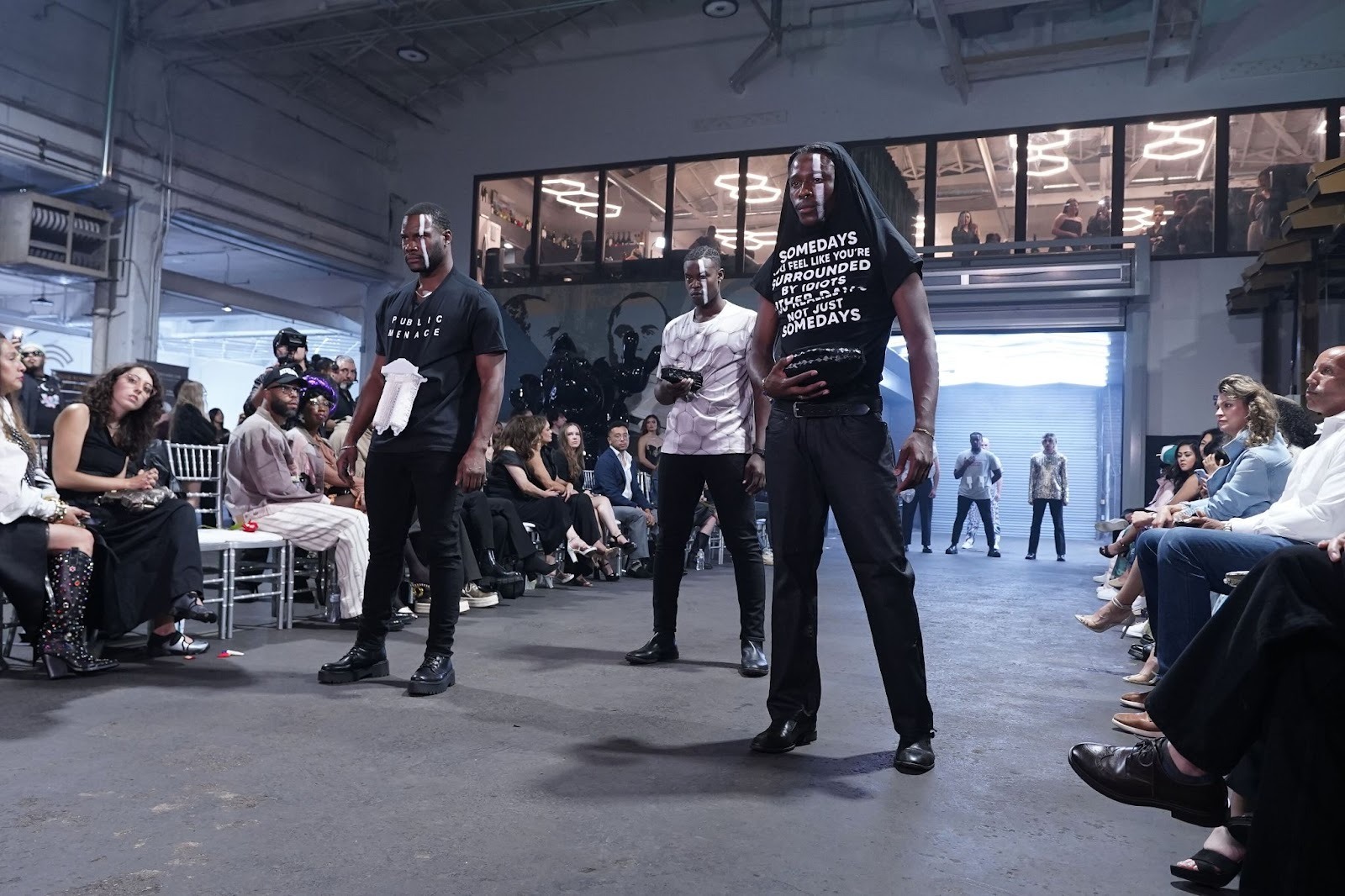
The Chicago Fashion Week presentation demonstrated how her vision translates to the runway. Models moved like kinetic sculptures, their movements revealing the mathematical precision embedded in each fold and angle. Viewers witnessed garments that echoed Marina City’s rhythmic setbacks in trouser construction and captured the Chicago Tribune Tower’s geometric elegance in jacket silhouettes.
Commercial Viability Meets Conceptual Rigor
Chen operates her brand on a dual mandate. Her Architectural Paper Collection, featured in multiple fashion magazines, establishes artistic credibility and attracts collectors who view the pieces as sculpture rather than mere clothing. Meanwhile, her Architectural T-Shirt Collection makes her design philosophy accessible to a broader market, having sold over 100 units globally.
Early skepticism about the paper’s durability dissipated when Chen demonstrated how her treated samples could bend, flex, and retain their original geometry even when exposed to water. “Traditional menswear demands conformity,” she notes. “My work offers men permission to inhabit form differently — to express complexity rather than suppress it.”
The recognition has been swift. Her successful Chicago Fashion Week showings have led to invitations from Miami Fashion Week and Los Angeles Fashion Week. Collectors from London, New York, and Shanghai have begun acquiring pieces from her Architectural Paper Collection. Critics cite her as a designer linking material science with psychological storytelling, each garment an equation in form and intent.
Chen’s zero-waste construction methods and rejection of traditional textiles position her within broader conversations about sustainable fashion. Yet her work refuses to sacrifice conceptual depth for environmental credentials. She creates garments that are simultaneously intellectually provocative, technically sophisticated, and fully functional.
Plans for shows in Berlin and Copenhagen signal her expanding international presence. What began as a student experiment in folding has evolved into a brand that challenges the traditional construction, wear, and understanding of menswear.