

When Dr. Adrian Attard Trevisan first began listening to the human voice as data, not sound, he wasn’t trying to make technology “hear” differently; he was trying to make it listen more effectively. In a private lab in Malta, the physiologist-turned-biotech founder spent years recording everyday speech, one call, one breath, one sigh at a time. He wasn’t searching for emotion or sentiment, the usual quarry of AI. He was looking for biology, tiny, measurable traces hidden in tone and rhythm that reflected fatigue, stress, respiratory strain, or even the slow onset of chronic illness.
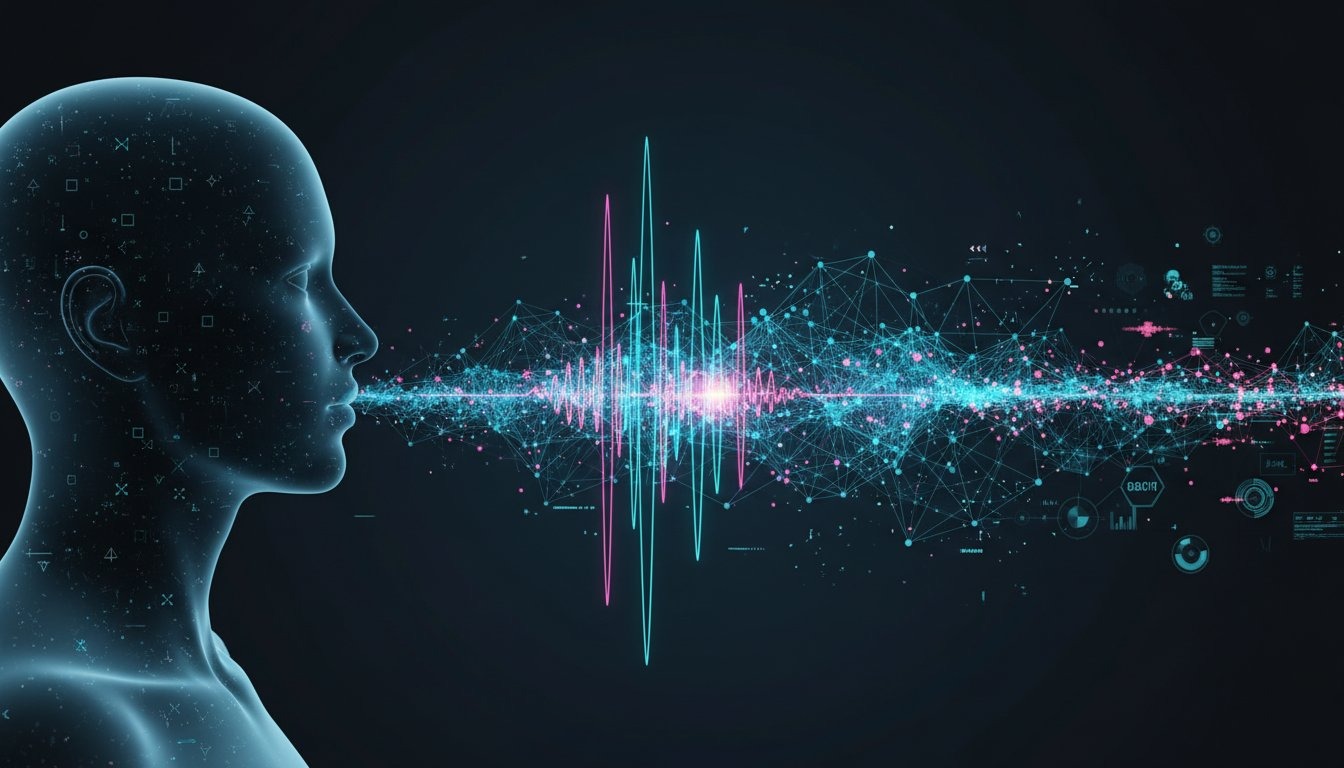
That initial curiosity has since evolved into Voice Biota, a biotechnology platform aiming to build what Trevisan calls “a living atlas of the human voice.” Today, it’s one of the most scientifically validated voice biomarker datasets in existence: more than 1.5 million real-world data points, 50 validated biomarkers, and three filed patents, all collected from natural speech rather than scripted or laboratory recordings. The mission feels almost poetic in scope: to prove that the voice, long a tool for communication, can also serve as a vital physiological signal.

“Voice Biota began not with an app or a product, but with a scientific question,” Trevisan says. “What if our voices could help us understand the body, passively, ethically, and at scale, without changing how we live or speak?”
A Decade of Listening To Biology
Trevisan’s career has always gravitated toward intersections between physiology and computing, biology and design, ethics and deployment. Before founding Voice Biota, he had spent over 15 years developing digital health systems that translated biological signals into actionable, real-world insights. The question of how to measure human biology without relying on wearables, invasive tests, or behavioral changes shaped much of that work.

In 2021, as major tech companies raced to build voice assistants, Trevisan was heading in the opposite direction. He wasn’t trying to understand what people said, but what their saying revealed about how they were physically functioning. To do that, he set aside the industry’s preference for scripted phrases and standardized lab recordings, instead turning his attention to organic, everyday speech, the kind captured on phone calls or voice messages, full of pauses, laughter, and imperfection.
“That was the turning point,” he explains. “Most voice analytics are designed around control, uniform wording, clear prompts, and structured conditions. But biology doesn’t happen in a lab; it happens in life.”
Voice Biota began that year as a research-only project with no commercial agenda, focusing on building and validating a large-scale, physiology-driven voice dataset before considering productization. For several years, the work remained entirely in the realm of research, with no marketing, no public product, and no official launch. Under Trevisan’s scientific leadership, the team quietly assembled what would become one of the world’s largest validated human voice datasets, drawn from natural speech, and validated markers linked to respiratory strain, cognitive load, engagement, and other facets of human state under real-world conditions.
By the time the platform opened to the public, it had already undergone years of internal scrutiny and continuous validation. When Voice Biota finally emerged from its research shadow and became accessible to a broader audience, it did so without a launch campaign or paid promotion, yet still reached around 1,800 active users within two weeks. For a research-led digital health system, that level of organic adoption functioned as its own form of peer review, suggesting that the combination of low friction and scientific credibility had struck a nerve.
From Research To Real-World Use
Voice Biota’s immediate focus lies not in consumer wellness but in enterprise environments, such as call centers, customer care, and consumer insights. These are places where millions of voice interactions occur daily, yet where human understanding has been limited to transcripts, sentiment scores, or manual reviews. Voice Biota integrates seamlessly into these channels, standard phone lines, customer care infrastructure, and even WhatsApp voice notes, extracting validated physiological markers from natural speech in real-time.
“We built Voice Biota to work with what already exists,” Trevisan notes. “Phone lines, voice channels, conversations between people, these are already physiological laboratories if we know how to listen.”
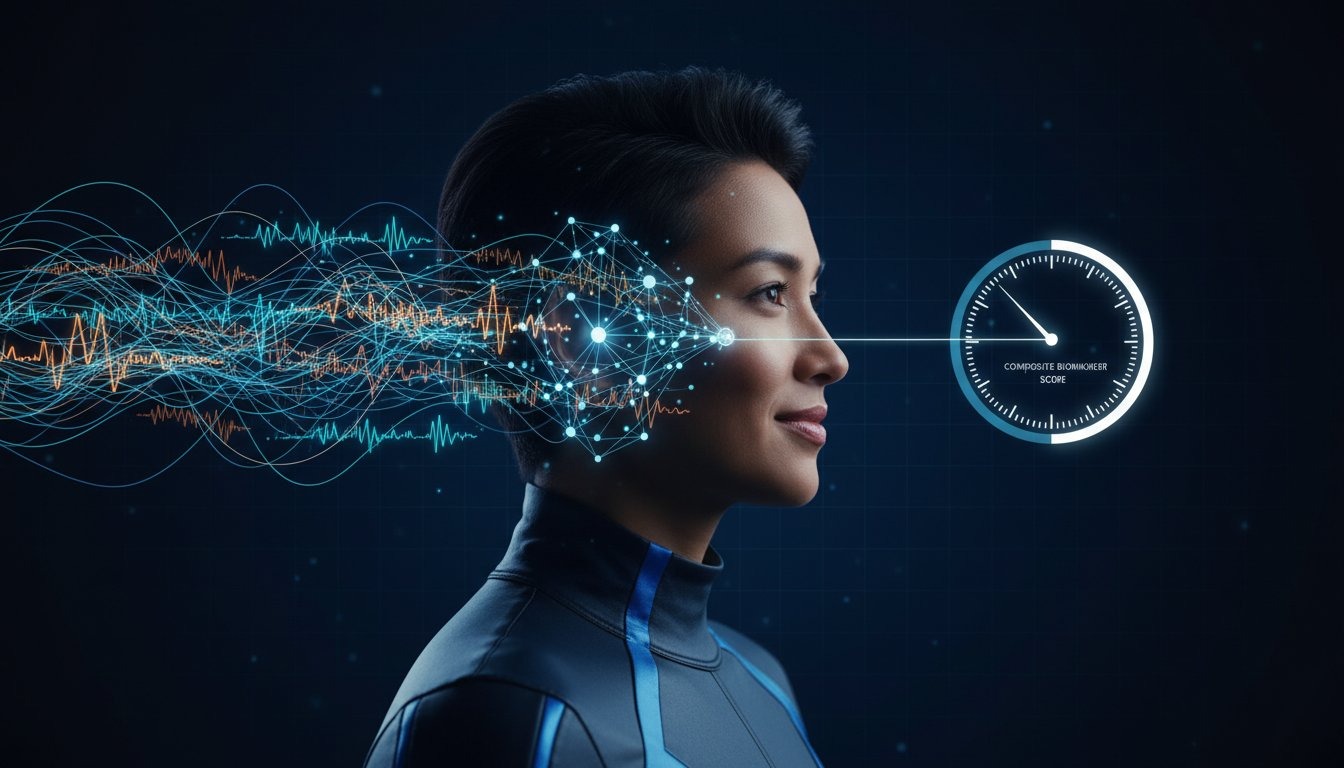
Unlike conventional analytics platforms, Voice Biota requires no hardware, no new software interface, and no behavioral change. It functions invisibly, feeding data-driven insights about engagement, cognitive effort, or fatigue straight into existing workflows. For large enterprises, this offers an alternative to biased surveys or costly quality reviews. For researchers, it opens a real-time window into population-level physiology.
Yet Trevisan remains insistent on clear ethical boundaries. Alongside enterprise use, a separate arm of his research, known as Respo, is progressing through formal medical device certification. Respo leverages the same voice biomarkers for the clinical monitoring of respiratory conditions, such as COPD and asthma, but under strict regulatory control, designed to securely connect patients and clinicians.
“That separation was non-negotiable,” he explains. “If we want the voice to be trusted as a physiological signal, we must keep its use scientifically and ethically grounded. The same dataset that helps a call center understand engagement can help a hospital monitor respiration, but only if we respect the regulatory context of each.”
The Voice As A New Frontier
Across the digital health and AI industries, Trevisan’s work is beginning to reshape assumptions about what “voice technology” can mean. While others, such as Sonde Health, Ellipsis Health, or Kintsugi, pursue narrow clinical or mental health models, Voice Biota’s approach stands apart in terms of scale, validation, and intent. Its biomarkers are not confined to wellness apps or scripted prompts but drawn from real human speech as it occurs naturally, across languages, cultures, and conditions.
“We’re not trying to read emotion,” Trevisan clarifies. “We’re modeling physiology. A voice isn’t just expressive, it’s biological. The temperature of your breath, the cadence of your speech, the way your airways respond to effort, all of that is data.”
The implications stretch far beyond enterprise analytics. In the long term, Trevisan envisions a world where voice serves as a standardized biological signal, capable of supporting public health research or continuous clinical care. Instead of relying on wearables or invasive tests, physicians could assess respiratory and chronic conditions through a simple phone call. For populations excluded from traditional digital health tools, elderly patients, and those in low-resource areas, such accessibility could be transformative.
“As a scientist, I want this to remain a living system,” he says. “Every new voice we analyze adds to the understanding of human variability. It’s not just data collection, it’s the beginning of a global physiological map.”
A Living Atlas of Sound
If the last decade of digital health was defined by sensors and wearables, Trevisan bets the next will be defined by voices. Voice Biota’s rapid adoption across research and enterprise suggests he may be right. Yet he resists grand declarations. To him, the platform’s growth is less a product milestone than a validation of scientific patience, a signal that research built on biological truth can, in time, find its place in the world.
“I don’t see Voice Biota as a company so much as a continuum of research,” he reflects. “Every time someone speaks into a phone and that voice tells us something meaningful about their physiology, we’re expanding what medicine and technology can learn from each other.”
In that sense, Voice Biota isn’t just listening to people, it’s documenting the sound of being alive.