

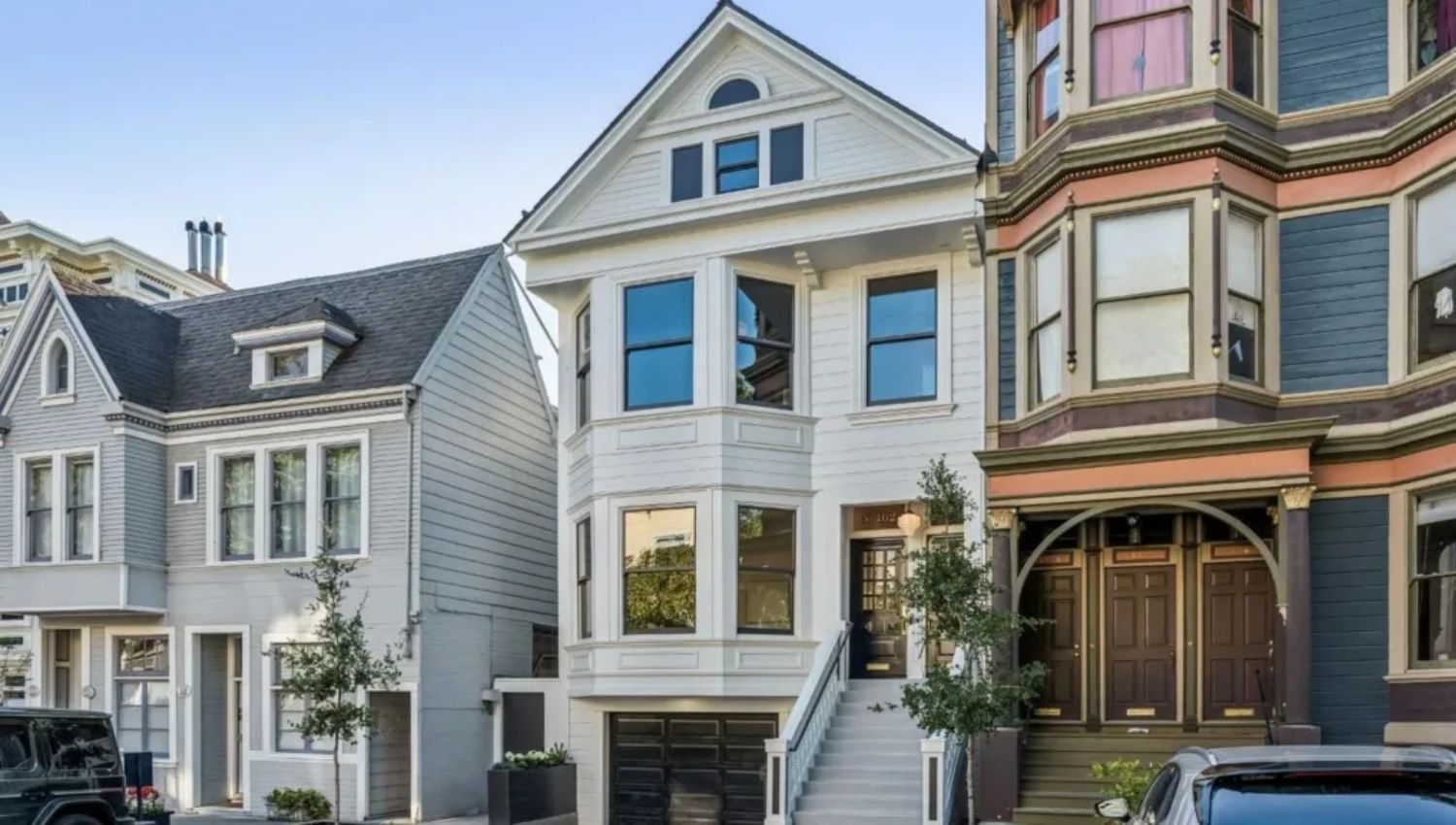
On a tree-lined street in the affluent Duboce Triangle neighbourhood of San Francisco, the upper half of a white, Edwardian-era detached house was drawing a steady stream of prospective buyers. The opulently renovated three-bedroom apartment was on the market for almost $3 million, and it had attracted extra attention for an unusual reason: the seller would consider shares in the artificial intelligence companies OpenAI or Anthropic in place of cash.
“The value is questionable, but I would like to buy,” said a young OpenAI employee who had just viewed the flat with his partner. The worker, who moved to the city two years ago for a technical job with the San Francisco-based company, is currently renting and said he planned to ask his bosses about the stock transfer option.
This is San Francisco in 2026, also home to fellow AI giant Anthropic. The city has become ground zero for the AI revolution, and its property prices have risen dramatically this year. “They are just astronomical,” said Daryl Fairweather, chief economist at the real estate company Redfin. “People are flush with cash and ready to buy.”
In March, San Francisco reclaimed its title as the most expensive city for homebuyers in the US, overtaking nearby San Jose in the heart of traditional Silicon Valley. That month the median house price rose 19 percent year on year, a trend that continued with increases of 14.5 percent in April and 14.1 percent in May, according to Redfin. As of May 2026, the median sale price in the city stood at a record $1.76 million, compared with nearly $400,000 for the US as a whole, where prices rose by just 1.4 percent in March and 2 percent in both April and May.
AI Money as the Driver
The near-universal view is that AI wealth is fuelling the red-hot market. “We have come to that conclusion based on what we’re seeing in the data, and what we’ve heard from our agents,” Fairweather said. She pointed to the steep jump in prices across the wider Bay Area’s luxury zip codes, including Duboce Triangle, since OpenAI launched ChatGPT in late 2022, a trend absent in cities with less AI money. It has also reversed the downturn San Francisco endured during the Covid pandemic, when the population fell and prices softened.
The salaries and signing bonuses paid to top AI staff can be extraordinary even by Silicon Valley standards, but the stock options have been more lucrative still, with employees allowed to partially cash them in through limited share sales. Last October, more than 600 current and former OpenAI employees sold combined shares worth $6.6 billion, an average of $11 million each, according to recent reports. Workers at Anthropic, whose main product is Claude, were also said to have been permitted to sell shares totalling some $6 billion. With both companies due for full stock market flotations later this year or next, minting still more multi-millionaire employees, many see no end to the rise. “Today’s bidding wars are going to be seen as bargains, and they already are,” said Rachel Swann, the listing agent for the Duboce Triangle property.
Reasons for Caution
Enrico Moretti, a professor of economics at the University of California, Berkeley, who lives in the city, said it is still “very early” in the AI boom, noting that the city’s population and employment levels, while rising, remain below their pre-pandemic peaks. There are also countervailing forces. Big tech firms such as Meta have recently made large layoffs, and as the AI industry shifts from its fast-growing innovation phase toward one of established companies, it may need fewer specialised workers able to command the same pay. Moretti added that the bulk of the wealth from the coming flotations will go to investors rather than employees, and those investors are spread around the globe.
For now, though, San Francisco estate agent Matthew Goulden calls the situation “crazy.” Goulden, who has been in the business for more than 20 years, said he first noticed an uptick in prospective buyers, many from the AI world, late last year. The upward pressure, he said, is not confined to luxury homes but extends across the market, from single-family houses to one-bedroom flats, and while it is most pronounced in desirable neighbourhoods, it is felt almost everywhere. Bidding wars are now common, sometimes pushing sale prices millions above asking, while homes are selling faster than ever and all-cash purchases appear to be surging, especially at the upper end.
Danielle Lazier, another experienced San Francisco realtor, described much the same but offered some perspective. There has long been a tendency in the city to list homes below market value to spark an auction effect, she said, and supply is chronically tight. San Francisco is small, has a high proportion of renters, and has struggled to build new housing, though the city’s new pro-growth mayor is trying to change that. “All of a sudden AI money can have an outsized effect,” she said.
Who Gets to Stay
The human story of the boom is told by who can remain in the city and who cannot. Two San Francisco families with school-aged children, both of whom asked to remain anonymous, recently managed to buy move-in-ready single-family homes to meet their need for more space, but only one was able to do so in the city itself.
That family bought in the family-friendly neighbourhood where they had long been renters after one parent, who works at OpenAI, sold company shares last October, providing the financial boost for an all-cash offer. The couple said they felt “conflicted and self-conscious” that AI money had made it possible. “We’re not ostentatious people,” they said. “We’ve just done what we can with the opportunity.”
The second family, which does not draw its income from AI or the tech world, had to move instead to a more suburban Bay Area town to the north. Their new home, bought partly with a mortgage, includes a pool and extra land. It is a different kind of life, the mother said, and they have mostly adapted, though it means a long commute for her husband, who holds a senior government job in San Francisco, and they still have “what if” moments. “We wouldn’t have left if we could have afforded to stay,” she reflected. “It kind of sucks and I do get a little salty seeing all this extra AI money squeeze everyone else out.”
The Duboce Triangle flat, according to its listing agent, ultimately sold for $3.2 million, $200,000 over asking. Whether the deal included AI stock remains confidential.