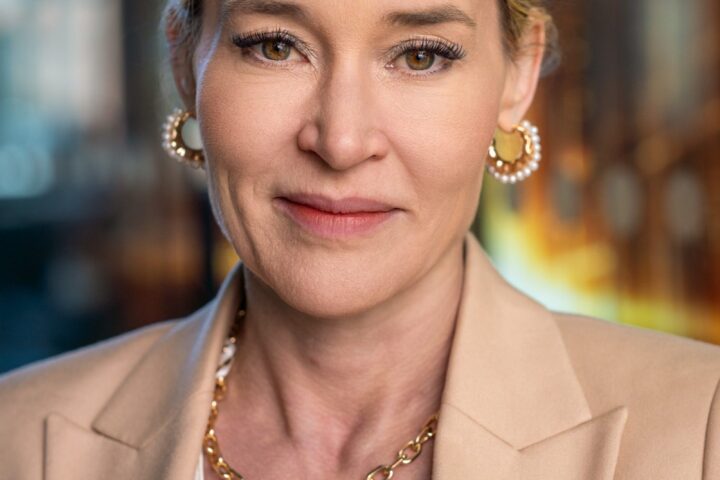



When Jennifer Fonzetti walks into a healthcare organization facing operational disorder, she does not reach for a quick fix. She goes for a blueprint.
Over more than two decades, Fonzetti has built a career defined not by titles but by the structural changes she leaves behind. From Vice President of Operations at a psychiatric services organization to Regional Director at a regional medical group in New Jersey, and later as VP of Medical Operations overseeing more than 500 employees and budgets exceeding $50 million, she has moved through increasingly complex environments and consistently delivered something rarer than short-term results: systems designed to last. She currently serves as Director of Patient Access at a multi-entity behavioral health organization, where her work has reshaped how patient access functions across multiple sites and service lines.
Fonzetti’s recognition with a 2026 Global Recognition Award in the Leadership category reflects a pattern of performance across organizations, roles, and conditions. It is not rooted in a single defining moment, but in a career’s worth of operational infrastructure built with precision and purpose.
Building Systems That Hold
Central to Fonzetti’s leadership philosophy is a principle she has applied consistently across every organization she has served: systems should outlast the people who build them. Rather than designing workflows that depend on individual judgment or institutional memory, she builds governance frameworks that enforce consistency at the structural level, embedding accountability through dashboards, KPI reporting, and standardized operating procedures that remain in place regardless of staffing changes or organizational challenges.
In her current role, she developed standardized procedures governing scheduling, crisis escalation, medication refills, higher-level-of-care referrals, and provider utilization tracking. The outcomes have been measurable, including improved patient conversion rates, reduced no-show rates, and increased consultation visit volume. These are not incidental improvements; they are the direct product of deliberate process design applied to a sector where operational fragmentation is common and costly.
Her tenure as VP of Medical Operations demonstrated this same approach on a significantly larger scale, covering multi-state ambulatory operations, enterprise performance governance, acquisition integration, and budget management exceeding $50 million. The retention rates and operational efficiencies achieved under her leadership were the result of sustained process optimization paired with a consistent investment in team development. “Systems should outlast the people who build them, and accountability should be embedded in structure rather than left to individual initiative,” Fonzetti has noted, a principle that has guided her work across every role she has held.
Leadership Under Pressure
Accurate measurement of operational leadership in healthcare is often what holds when conditions deteriorate. Fonzetti’s record includes sustained performance through staff shortages, provider leave, compliance audits, and periods of rapid organizational growth, circumstances that routinely destabilize healthcare operations. Her response to these pressures has been consistent: anchor teams to clear objectives, establish transparent escalation paths, and keep the focus on patient impact rather than internal disruption.
Her commitment to ethical rigor has been equally central to her approach. Throughout her career, she has identified and escalated risks related to patient safety, handling of protected health information, documentation integrity, and billing practices, even when doing so posed operational or political difficulties. Rather than relying on individual judgment, which can vary with circumstances and personnel, she designs systems that enforce ethical behavior through controls, documentation standards, and auditability. This reflects a clear-eyed understanding of where healthcare organizations are most vulnerable to failure and a deliberate effort to address those vulnerabilities before they become crises.
She also mentors managers to think analytically about performance data rather than react to it, developing a generation of operational leaders capable of making decisions with confidence and owning outcomes rather than deflecting them. The effect in her current organization has been cumulative: an operational infrastructure that supports consistent, high-quality patient care across sites and service lines, built not through top-down mandate but through institutional habits she has steadily reinforced.
A Model Worth Examining
The Global Recognition Awards evaluation process applies the Rasch model to create a linear measurement scale across categories, enabling comparisons between applicants who excel in different disciplines. Fonzetti’s scores across leadership dimensions placed her among the top tier of this year’s applicants, a result the organization attributed to the consistency and depth of her contributions across multiple organizations and roles rather than any single standout achievement.
Alex Sterling, a spokesperson for Global Recognition Awards, offered a direct assessment: “Jennifer Fonzetti exemplifies exactly what this award was designed to recognize, a leader who does not simply manage complexity but resolves it, building systems that hold up under pressure and teams that perform because they trust the structure she creates.” That observation captures something important about what distinguishes her work: the outcomes she produces are not dependent on her continued presence, but on the structures she leaves behind.
In a sector where short-term fixes are often prioritized over long-term structural design, Fonzetti’s career offers a different model, one where operational precision, ethical accountability, and team development are not competing priorities but mutually reinforcing ones. Her work has affected thousands of patient encounters annually and produced replicable frameworks with clear implications for behavioral health and ambulatory care organizations navigating the same pressures she has spent two decades learning to address. That kind of institutional contribution, built steadily and without fanfare, is precisely what lasting leadership in healthcare looks like.