


A padded postal envelope is an unlikely starting point for a tech business. Yet that improvised fix helps explain how STM Goods began. More than 25 years ago, Ethan Nyholm slipped his laptop into a padded mailer and carried it inside a hiking pack, knowing it worked for the moment but would never be a real answer. From that small act, he and Adina Jacobs built STM, a company that grew around a simple problem: fragile devices travel through rough daily life.
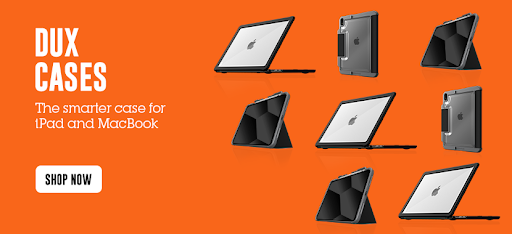
Among STM’s products, the Dux case became the clearest expression of that idea. The company says the Dux line set the standard for rugged iPad cases more than a decade ago and continues to be copied by competitors. That claim matters because it places Dux inside a broader change in consumer electronics. Once iPads moved from luxury gadgets into classrooms, workplaces, and family routines, protection stopped being an afterthought. It became part of the device’s usefulness.
A business built around breakage
STM describes the problem it solves in plain terms: device breakage. That may sound obvious, but it gave the company a durable place in the market. Tablets crack, corners split, screens shatter, and keyboards fail under heavy daily use. For schools and businesses buying devices at scale, that damage brings more than repair costs. It disrupts lessons, work, and budgets.
The Dux line became central to STM’s answer. The company lists Dux Plus, Dux Ultra, and the Dux USB-C Keyboard for iPad among its best-selling products. That product mix shows that STM was not simply making a shell around a tablet. It was building for the reality of how tablets are used: carried from class to class, handled by children, passed between workers, propped up for typing, and packed away again.
STM says it has deployed millions of Dux cases for iPads around the world. That number suggests institutional scale, not just consumer browsing. It also helps explain why the case still matters. A product reaches that level when it solves a recurring, costly problem well enough that schools and organizations keep ordering it.
How Dux helped shape the category
The rise of the iPad in education changed the accessories business. A classroom tablet has to survive drops, crowded desks, backpacks, and constant handling. That environment made rugged protection less of a retail add-on and more of an operating necessity. The case had to become part of the device’s daily survival.
That is where Dux found its role. STM says the line became the original leader in intuitive and rugged iPad cases. Competitors including Belkin, Logitech, and Brenthaven entered the same space, but STM argues that Dux established the template others followed. Copying is common in accessories, yet imitation carries a simple message: the market has decided a particular idea works.
The company’s staying power makes that claim more credible. STM says it has remained privately owned and debt free for more than 26 years while competing in the United States, Canada, Latin America, ANZ, APAC, EMEU, the UK, and China. For a smaller firm in a category crowded with larger names, longevity is part of the story.
Why it still matters
Some tech products are remembered for novelty. Dux has lasted because it addressed a need that did not disappear. Devices still break. Schools still budget for loss and damage. Workers still carry costly tablets into messy, ordinary settings. Protection remains less glamorous than the device itself, but it often decides how long that device stays useful.
STM’s story is really about that quieter part of the tech economy. Hardware launches get the attention. Accessories absorb the wear. The Dux case did not change the tablet market by replacing the iPad. It changed it by helping define what people came to expect from the products wrapped around it. For a case, that is a lasting mark.