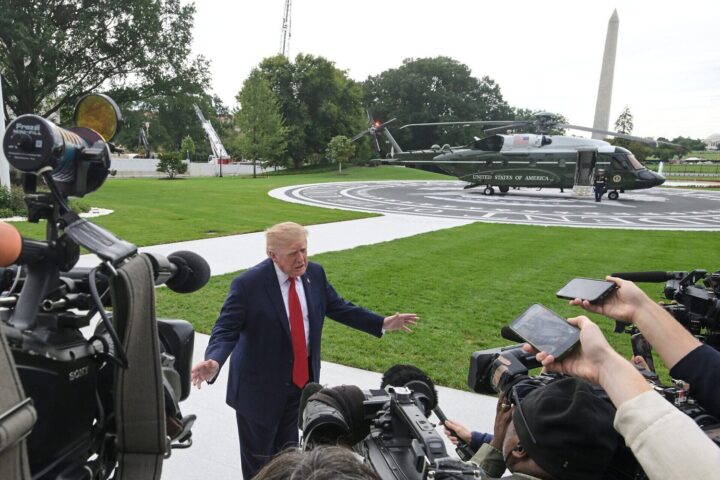

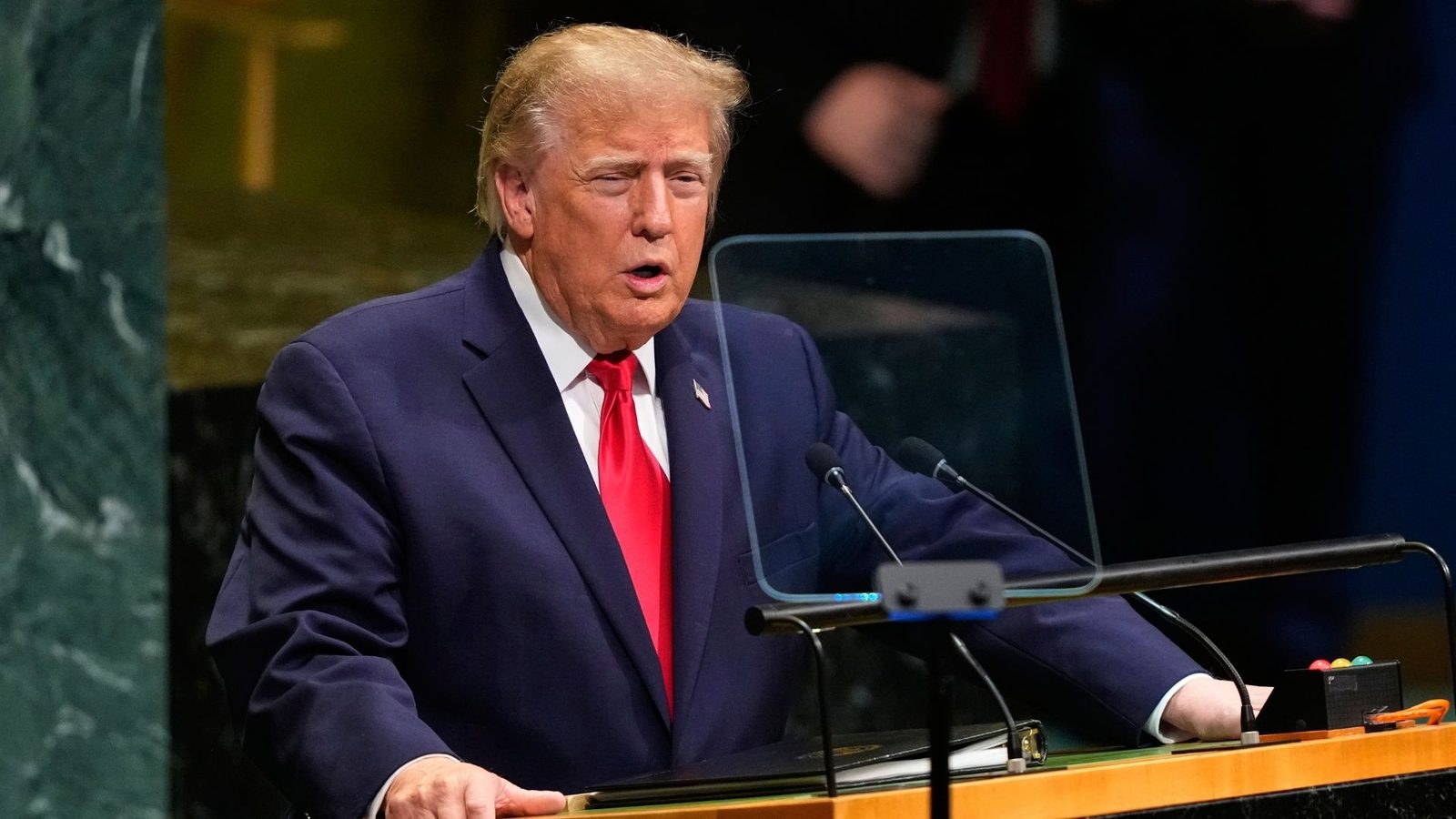

President Donald Trump used his address to the United Nations General Assembly to press Iran over its future and to present himself as a peacemaker on the world stage. Speaking to leaders gathered in New York, he ranged across foreign policy, migration and the record of his administration, at times casting the United States as the decisive actor in global affairs. The speech was received with polite applause before and after his remarks.
The sharpest passage concerned Iran. Trump laid out what he framed as a stark choice between a negotiated settlement and military action. “Will a deal be made with Iran that lets them rebuild and create a far greater country than it ever was before,” he asked, before adding, “Or do I annihilate the Islamic Republic and do it quickly?” The language marked one of the most pointed moments of the address.
He also drew a contrast between his approach and that of other governments. “While others have spoken of peace, I have made peace. While others have ignored threats, I have confronted them,” he told the assembly. The claim fit a broader theme running through the speech, in which the president presented recent diplomacy as evidence that pressure rather than patient negotiation had delivered results for the United States.
Trump touched on technology as well, saying the United States would begin referring to artificial intelligence as “super intelligence,” a rebranding he offered without detailed explanation. He returned repeatedly to migration and border control, themes that have defined much of his political message, and questioned the effectiveness of the United Nations itself as a forum for solving the world’s conflicts.
The address came shortly before a scheduled meeting between Trump and the Ukrainian president, Volodymyr Zelensky, on the sidelines of the assembly, where the war with Russia was expected to dominate. For the annual gathering, the speech set a combative tone early in the week, and it left diplomats to weigh how far the rhetoric on Iran reflected firm intent and how much was aimed at strengthening a negotiating position. Reaction from other delegations was muted, with several governments choosing to hold their formal responses until the full week of speeches had run its course.