
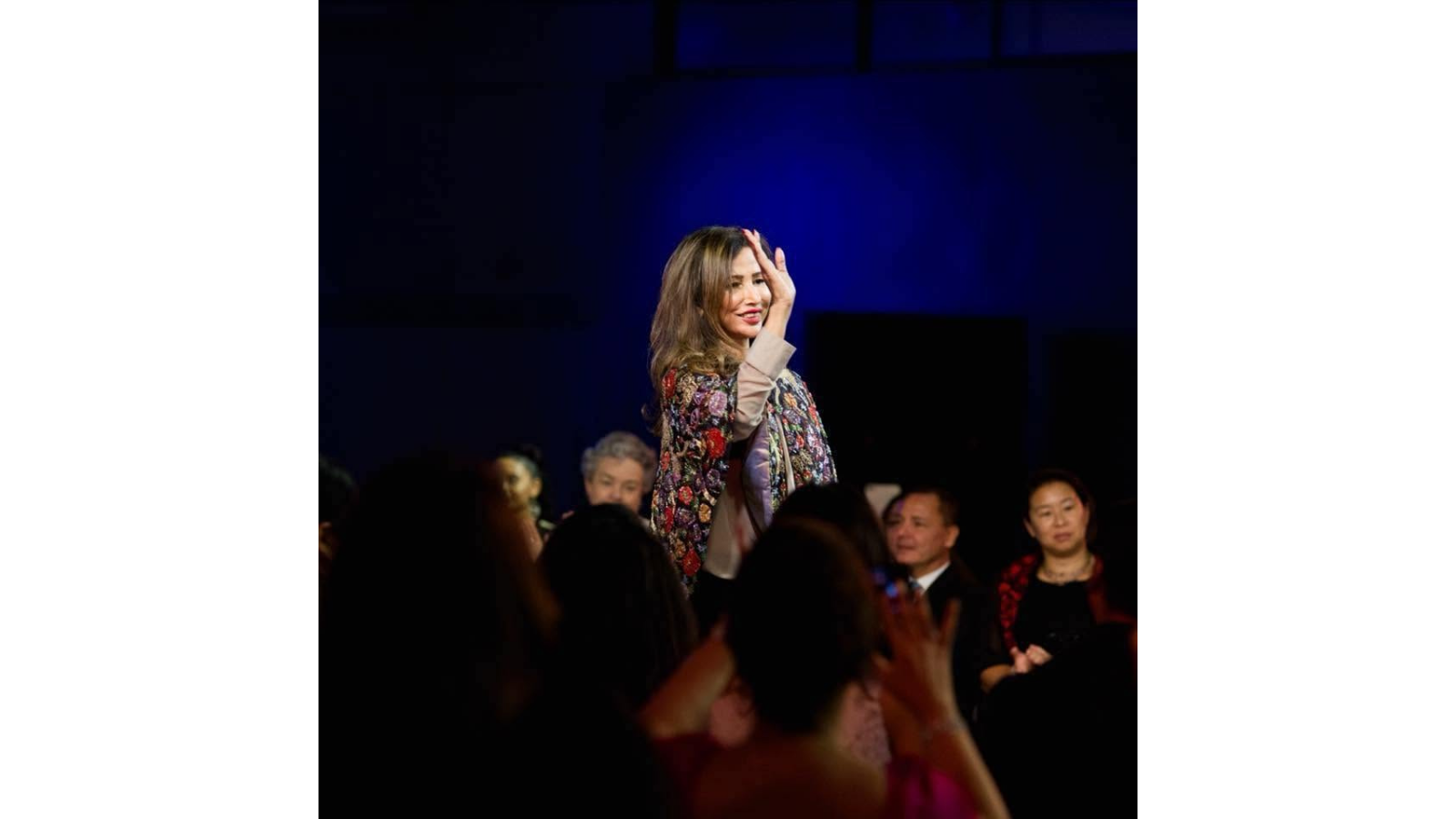

In the fine threads of muslin and the disciplined layers of embroidery, Rina Latif has spent three decades turning Bangladesh from a manufacturing afterthought into a measured presence in global luxury fashion.
Craft, Commerce, And A Long View
Rina Latif’s career began not with a flagship store or an international showcase, but with the quiet return of handblock printing to a market that had largely moved on. Rina Latif’s hand block printing is distinctive and recognizable because her method is unique and different. She used that starting point to test how traditional methods might sit within modern wardrobes, gradually shifting from familiar motifs to more experimental embroidery that questioned what decoration on cloth could do. Over time, this steady exploration produced a design language that is recognizably hers, built on controlled tone, botanical references, and a preference for composition over spectacle.
The emergence of tapestry embroidery within her practice came from a series of incremental adjustments rather than a single moment of change. By layering fine threads into unified surfaces, Latif created pieces that carry a sense of depth without relying on excess, making the garments legible up close and at a distance. In a regional market crowded with ornate work, this approach gave the Rina Latif label a distinct position, detailed enough to reward attention, but restrained enough to feel deliberate rather than ornamental for its own sake.
Underpinning that aesthetic is a close relationship with textiles that predate her by centuries. Muslin, benarasi silk, khadi, and jamdani form the backbone of her collections, each treated as a material with its own demands rather than as interchangeable carriers for embroidery. Latif sources from weavers across Bangladesh, engaging with a range of regional techniques that shape the character of each collection. Clients encounter garments that respect traditional drape and weave while aligning proportion, color, and styling with international expectations for luxury ready-to-wear and occasion dressing, a balance she has maintained season after season to keep the label’s identity clear across markets.
Muslin, Memory, And Strategic Revival
Among all the textiles in her studio, muslin carries the most narrative weight. Once renowned in Bengal and then nearly absent from commercial use, it entered Latif’s professional life through stories she heard as a child about its fineness and reputation. Those stories eventually became a working brief: find the remaining weavers who still understood parts of the process, listen to what they knew, and see whether the fabric could re-enter contemporary wardrobes without being reduced to a museum piece.
The result is a renewed muslin practice that goes beyond simple replication of archive garments. Latif often treats the fabric as a light, moving surface for hand painting, recalling watercolor and embroidery, ranging from traditional florals to more abstract patterning. These decisions allow muslin to function in formal, semi-formal, and elevated everyday settings, keeping the textile’s defining lightness intact while giving it practical relevance for current buyers. In doing so, she supports hundreds of artisans and helps preserve local knowledge, but the focus remains on how the cloth can be worn rather than only on what it once represented.
Her 2018 show, “An Odyssey into Imagination, Thirty Years of Rina Latif,” made this philosophy visible to a wider audience. Staged in Bangladesh after nearly two decades of emphasis on international markets, the presentation linked khadi, muslin, benarasi, and jamdani into a single, coherent story about craft and design. It demonstrated that one designer, working with a clear set of priorities, could hold multiple textile traditions together without flattening their differences, offering local audiences and visiting buyers a grounded view of what a modern Bangladeshi luxury label might look like on its own terms.
Global Footprint And Durable Influence
Today, the Rina Latif label appears in cities including Delhi, Mumbai, Kolkata, Dubai, London, and New York, giving Bangladesh a regular presence on retail floors that have historically favored other South Asian names. This footprint did not arrive through a single headline show or sudden viral moment, but through a structured approach to design, sourcing, and market engagement that prizes consistency over speed. Retail partners and private clients see continuity in quality and fit, supported by tightly managed production standards and direct relationships with artisan clusters responsible for weaving and handwork.
Latif has also extended her work into menswear, particularly festive and formal pieces that translate her embroidery and textile stories onto different silhouettes. The garments carry the same attention to proportion, fabric, and surface detail found in her womenswear, suggesting that her design system can move across categories without losing coherence. For families and communities that invest in these pieces, the shared craftsmanship becomes a quiet thread running through wardrobes, connecting generations through garments that feel related rather than identical.
Beyond the clothes themselves, Latif’s stance on originality and intellectual property has added another layer to her influence. She speaks openly about copying and the need for stronger legal and professional norms in Bangladesh’s fashion ecosystem, framing motifs and techniques as assets that require protection and thoughtful negotiation. Younger designers and boutiques have responded by paying closer attention to textile storytelling and authorship, particularly around muslin and embroidery, an indication that her example now serves as a practical reference point for heritage-informed design that does not lean on nostalgia. Within this broader context of evolving standards and expectations in South Asian fashion, her recognition with a 2026 Global Recognition Award functions as a formal marker of a longer, ongoing shift she helped set in motion.
Over three decades, the common thread in Rina Latif’s work is not a single collection or technique, but a steady insistence that Bangladesh’s textile heritage can speak for itself in the language of contemporary luxury, one carefully measured stitch at a time.