
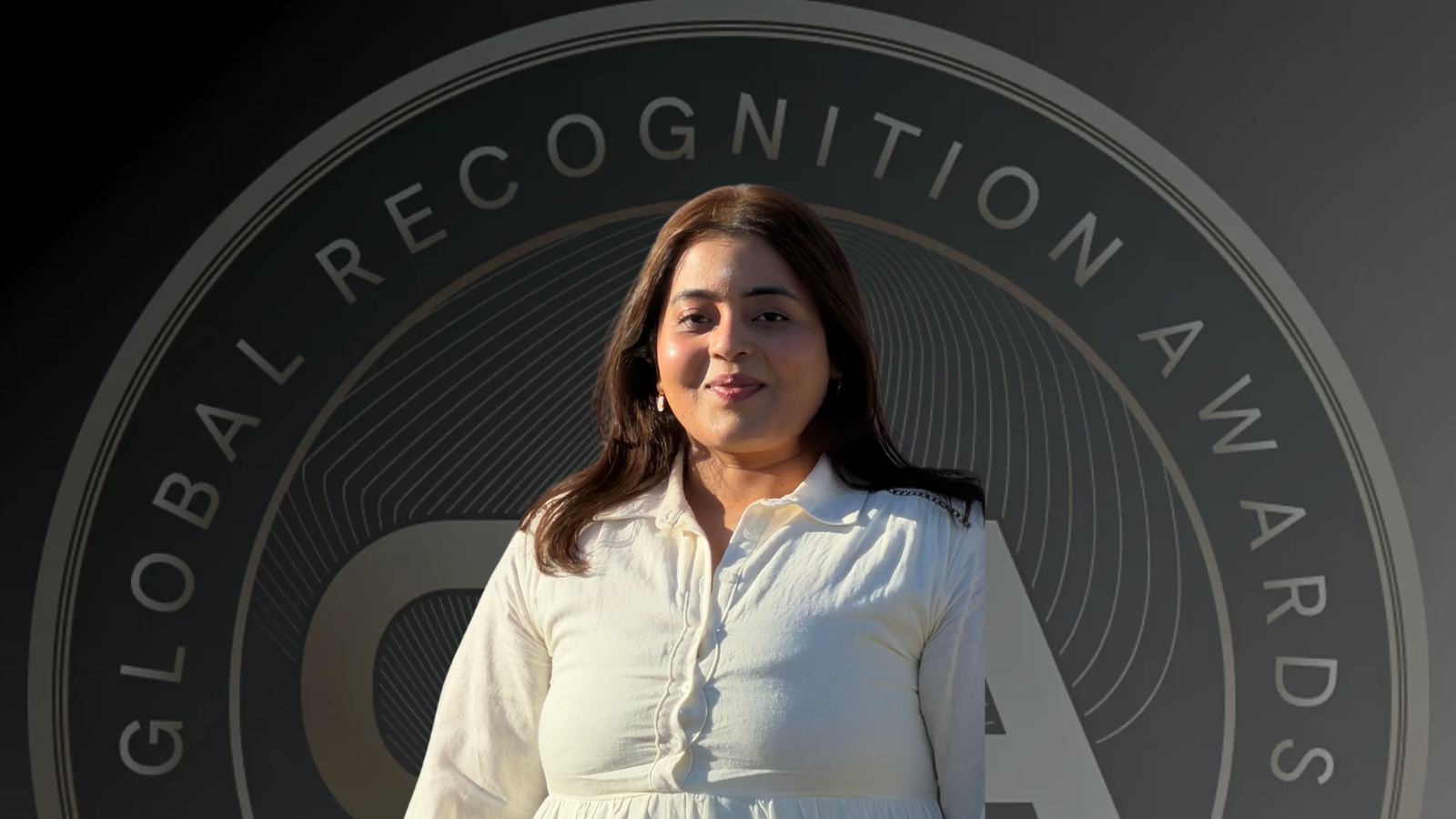

Photo Courtesy of Mahathi KariMahathi Kari builds the delivery systems that keep a heartbeat monitor’s software dependable, and she has received a 2026 Global Recognition Award in the Innovation, Research category for it.
In software that displays a patient’s heartbeat, the most important work often happens where no clinician will see it: in the checks that run before a change reaches the screen. Kari has built her career around that stage of the process.
Where Reliability Becomes Routine
Kari is a DevOps Engineer supporting Johnson & Johnson Technology on the Impella screen project, a healthcare initiative in which accurate presentation of patient heartbeat data is essential to the system’s function. She designed and manages the continuous integration and deployment pipeline that builds, tests, security-validates, and deploys software changes. In a system where patient safety depends directly on reliability, the pipeline is part of the product’s safeguards, not a back-office convenience.
The architecture is deliberate. GitLab, Jenkins, Terraform, Ansible, Docker, and Kubernetes form a repeatable, controlled delivery process across development and deployment environments. Checkmarx, Semgrep, Snyk, and Coverity are layered in so that security and code-quality risks are caught before release. Splunk and Prometheus give her team real-time visibility into pipeline and application health, so problems surface early rather than after deployment.
What distinguishes her approach is how she handles problems when they arise. Kari treats each pipeline failure, deployment blocker, and security finding as a possible risk to patient-facing reliability, not a routine ticket to close. She takes ownership of root-cause investigation and works with developers, testers, and infrastructure specialists to ensure fixes are durable, not temporary. The philosophy is that long-term stability matters more than short-term convenience, and it makes sense in a regulated healthcare environment.
A Research Record With Practical Weight
Kari’s engineering sits alongside a published body of work. Her Google Scholar profile lists 52 citations, an h-index of 4, and an i10-index of 2. Those figures show that other researchers are reading and building on her papers, which is a useful signal for an engineer who is also working full-time on a live healthcare system.
Her most cited paper, with 26 citations, examines machine-learning-based zero-trust intrusion detection for cloud computing. The subject speaks to a problem that grows more pressing as organizations move workloads onto distributed cloud infrastructure. A second paper, on the effect of artificial intelligence on the software development lifecycle, has 13 citations. Its themes of automation and validation reflect the work she does daily on the Impella project.
The rest of her portfolio is broad. It covers automated defect prediction, AI-assisted database query optimization, deep-learning phishing detection, and network-security fault prediction, along with a comparative study of the performance of the MD5, SHA-256, and SHA-512 hashing algorithms. Many researchers work mainly in theory, without an operational counterpart. Kari’s papers and her job concern the same kinds of systems, and each informs the other.
What the Judges Weighed
The Innovation, Research category was chosen for Kari because reviewers found it hard to separate her scholarly output from her applied engineering. Her file stood out because it does not treat research and operations as parallel tracks. The same analytical habits appear in both settings and reinforce one another over time.
Shortlisted applicants are evaluated with the Rasch model, a statistical framework that converts subjective grading into a linear measurement scale. The method lets judges compare candidates across very different fields while keeping the process fair and consistent. Alex Sterling, spokesperson for Global Recognition Awards, said: “Kari represents the kind of candidate our Innovation, Research category exists for, someone whose academic work and daily engineering responsibilities reinforce each other rather than sitting apart.”
The citation record suggests her research carries weight beyond her own institution, while her ownership of a mission-critical healthcare pipeline shows she can apply that thinking under real constraints. Few engineers at this stage of their careers combine both with equal seriousness. For Kari, the screen that displays a patient’s heartbeat is where the research and the engineering meet, and she builds with that in mind.