
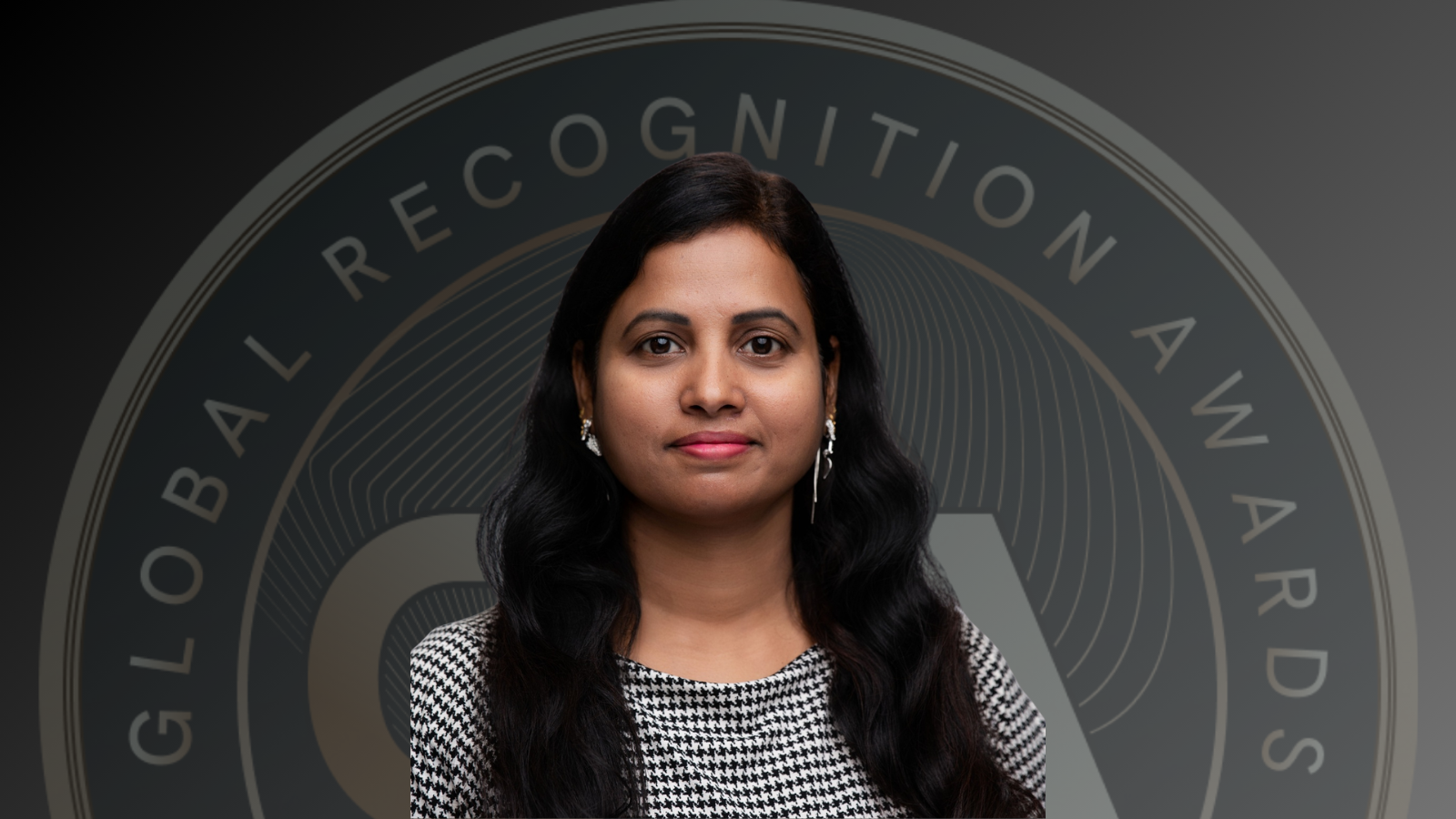

Anitha Dakamarri has spent her career doing something the cybersecurity industry often struggles to accomplish: making security work for people, not just systems.
As a senior security engineer at Donnelley Financial Solutions (DFIN), Dakamarri has built and maintained enterprise-scale security infrastructure that protects critical financial compliance systems used by Fortune 500 organizations across 60 countries. Her work reflects technical depth and practical urgency. The global cybersecurity market, valued at approximately $16.61 billion in 2025, is projected to reach $41.8 billion by 2029, driven by the kind of sophisticated, scalable frameworks she has spent years developing. That work earned her a 2025 Global Recognition Award from the international organization that honors professionals whose contributions carry measurable weight in their fields.
Building Security From the Inside Out
Dakamarri’s approach to enterprise security at DFIN centers on embedding protection throughout the software development lifecycle rather than treating it as a final checkpoint. Her leadership vision is clear: operationalize application security as an integrated, measurable part of engineering execution rather than a separate gate. With cybercrime costs expected to exceed $10.5 trillion annually, such a measurable reduction carries real operational significance.
At DFIN, she has led multiple initiatives spanning vulnerability management, platform refresh, Metrics-That-Matter (MtM) rollout, third-party penetration testing cycles, product security readouts, and audit and compliance delivery, driving outcomes that materially improved security posture. Her leadership directly contributed to reducing overall vulnerabilities by more than 70 percent through the decommissioning of obsolete hardware and software. Her technical work covers DevSecOps implementation, static and dynamic testing methodologies, and container protection across AWS and Azure environments. She has also developed threat modeling frameworks and risk-based vulnerability management systems designed to reduce organizational exposure without slowing development cycles. This balance remains one of the more persistent challenges in modern software engineering.
Dakamarri independently designed and operationalized a comprehensive SSDLC, established organization-wide security standards, and implemented automated secure code review using industry-leading static analysis tools across CI/CD pipelines. She introduced DAST tooling for pre-production testing of flagship products, significantly reducing production risk. Dakamarri leads a security champions program that covers a large base of developers at DFIN, building shared accountability for security decisions across a large, complex organization. By embedding AppSec controls directly into CI/CD pipelines, development workflows, and product standards, she positions security as an enabler rather than an obstacle, encouraging engineering teams to actively participate in threat modeling, vulnerability remediation, and secure design decisions, and creating a culture where security is viewed as a collective responsibility.
She has also demonstrated strong resourcefulness by building repeatable vulnerability management processes that span discovery, prioritization, remediation coordination, retesting, and closure. Her development of security scorecards and reporting mechanisms provides leadership with clear visibility into risk trends and remediation performance. Beyond operational impact, she helped retire platforms and applications, generating significant renewal cost savings, while ensuring security outcomes remained covered and measurable. This contribution earned her the Employee of the Year award in 2024 and 2025.
“The integration of AI-driven automation into our security framework has improved our vulnerability detection capabilities and fundamentally changed how we approach secure software development at scale,” she said, describing how her team now treats security not as an isolated function, but as a continuous and collective practice.
Dakamarri has earned trust and credibility through consistent, transparent, and respectful communication at all levels of the organization. She excels at translating complex technical risk into clear, actionable insights for technical and non-technical audiences. Her data-driven approach, delivered through KPIs, KRIs, dashboards, and leadership-ready reporting, ensures that risk conversations are objective, measurable, and aligned with business priorities. During audits, security reviews, and remediation discussions, she is known for her calm, collaborative style: addressing gaps constructively, focusing on solutions rather than blame, and consistently following through on commitments.
Advancing the Profession Through Knowledge Sharing
Dakamarri’s influence extends well beyond her organization through active engagement with the broader cybersecurity community. She holds multiple professional certifications, including CISSP, CISM, CEH, and CHFI, reflecting her commitment to continuous learning and professional growth. Her selection as a featured presenter at the ISC2 Security Congress 2025, which draws more than 4,000 professionals worldwide, reflects a recognized ability to translate dense technical subject matter into clear, actionable insight. She has also presented at LASCON and SECON International, addressing topics such as AI-driven shift-left practices and open-source software risk management.
As an active contributor to ISC2 exam development and the Unified Body of Knowledge (UBK), as well as ISACA’s CISM exam development, she helps ensure that industry certifications reflect real-world threats, practical skills, and evolving security challenges, directly influencing how cybersecurity professionals worldwide are trained, evaluated, and prepared to protect critical systems. Her contributions to the OWASP community, including work on the Gen AI Red Team Guide, AIBOM, and data security standards, as well as active participation in Cyclone-DX discussions and other open-source initiatives, reflect a longer-term commitment to building shared resources for the profession. The adoption of DevSecOps methodologies by 54 percent of organizations specifically to improve security quality and resilience points to the growing relevance of the frameworks she has consistently promoted in practice and in public forums.
She has also partnered with Black and Scot (UK) to deliver DevSecOps education to university and community audiences, enabling practical, security-first learning. Through her service on DFIN’s DEI Council, she has collaborated to advance diversity, equity, and inclusion initiatives, strengthening the human foundation of secure organizations.
“Sharing knowledge and advancing community standards is not just about technical excellence; it’s about creating a foundation for collective progress that benefits the entire profession,” Dakamarri noted. That orientation toward the field rather than individual recognition defines much of how she operates as a practitioner and a communicator.
Expanding Access and Mentoring the Next Generation
Women currently make up just 22 percent of cybersecurity teams globally, and the field faces an estimated shortage of 4 million professionals. Dakamarri has responded to realities with direct action. Through her leadership role with Women in Cybersecurity (WiCYS) and Women4Cyber (UK), she has mentored six women transitioning into security roles, particularly women and those from non-traditional or underrepresented backgrounds transitioning into security roles, providing the kind of structured, sustained guidance that often determines whether a career change succeeds or stalls. Through sustained mentorship and exam-focused guidance, she has supported multiple professionals in successfully achieving CISM and CISSP certifications, helping them build confidence, technical depth, and professional credibility.
Her community engagement reaches beyond the profession itself. Through volunteer work with the Treasured Vessels Foundation, she teaches computer skills to survivors of human trafficking, grounding technology literacy in economic opportunity for people with limited starting points. This people-centered commitment reflects a security mindset grounded in dignity, safety, and opportunity. Her work with TEALS (Technology Education and Literacy in Schools) brings security awareness to high school students in underserved communities, creating early pathways into a field that remains largely inaccessible to those without institutional connections. Dakamarri’s fluency in English, Telugu, and Hindi enables her to reach communities that are often overlooked in recruitment and outreach efforts.
Her journey from overcoming early life adversity to becoming a respected security leader adds depth and authenticity to her work. She brings empathy to risk management, ethics to engineering, and courage to governance, embodying the ISC2 mission of advancing cybersecurity not just as a profession, but as a force for trust, dignity, and global resilience.
“When we invest in education and mentorship for underrepresented communities, we’re not just changing individual lives, we’re fundamentally strengthening the entire cybersecurity ecosystem,” she said. Dakamarri has backed that belief not with rhetoric. Still, with years of consistent, personal effort, she has demonstrated that the most durable contributions to a profession are rarely the loudest.