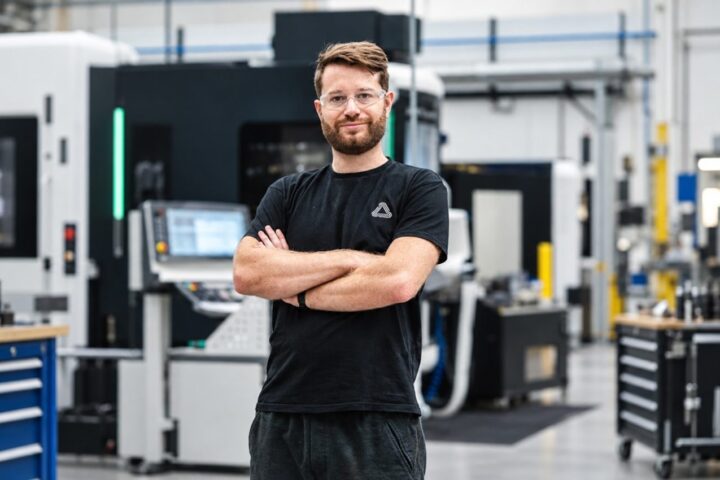



Apex Intelligence, a startup founded by artificial intelligence researcher Yongchao Chen, has raised close to $50 million to build models that improve themselves with limited human input. The funding, announced on September 16, came through angel and angel-plus rounds. Backers include IDG Capital, LinkX Capital and drug-discovery company XtalPi, with the later tranche co-led by the Zhongguancun Science City Fund, Shenzhen Capital Group and a Shanghai industrial fund. It is a sizeable sum for a company still early in its life.
Chen is an assistant professor at Tsinghua University’s School of Artificial Intelligence. He studied as an undergraduate at the University of Science and Technology of China before completing a joint doctoral program run by Harvard and MIT. His earlier research took him to Google DeepMind, Microsoft and the MIT-IBM Watson AI Lab. Apex is developing what it calls self-evolving foundation models built for scientific work rather than everyday conversation.
The method relies on recursive self-improvement. Systems generate hypotheses, run experiments, assess the outcomes and use the findings to refine later attempts. Chen wants the technique applied to fields such as chip design, molecular research and quantitative trading, where large amounts of trial and error are routine and constant human review can slow the pace of discovery. The company frames the work as a path toward systems that can carry out research with less supervision.
“I have always believed that models taught by humans are ultimately limited by humans themselves,” Chen said. He has set out a sequence in which early large models take on white-collar tasks, embodied systems handle physical labour and more capable tools eventually support the most demanding scientific problems that researchers face, a goal he casts as a long-term research bet rather than a product for the near term.
The company plans to expand its research team, recruit staff and build ties with universities in North America, with visits planned during September for hiring and collaboration. Its investors are wagering that a lab led by an early-career academic can compete against far larger and better-resourced rivals. The round joined a series of sizeable early-stage AI deals recorded across China during the month, as capital continued to flow toward research-focused founders.